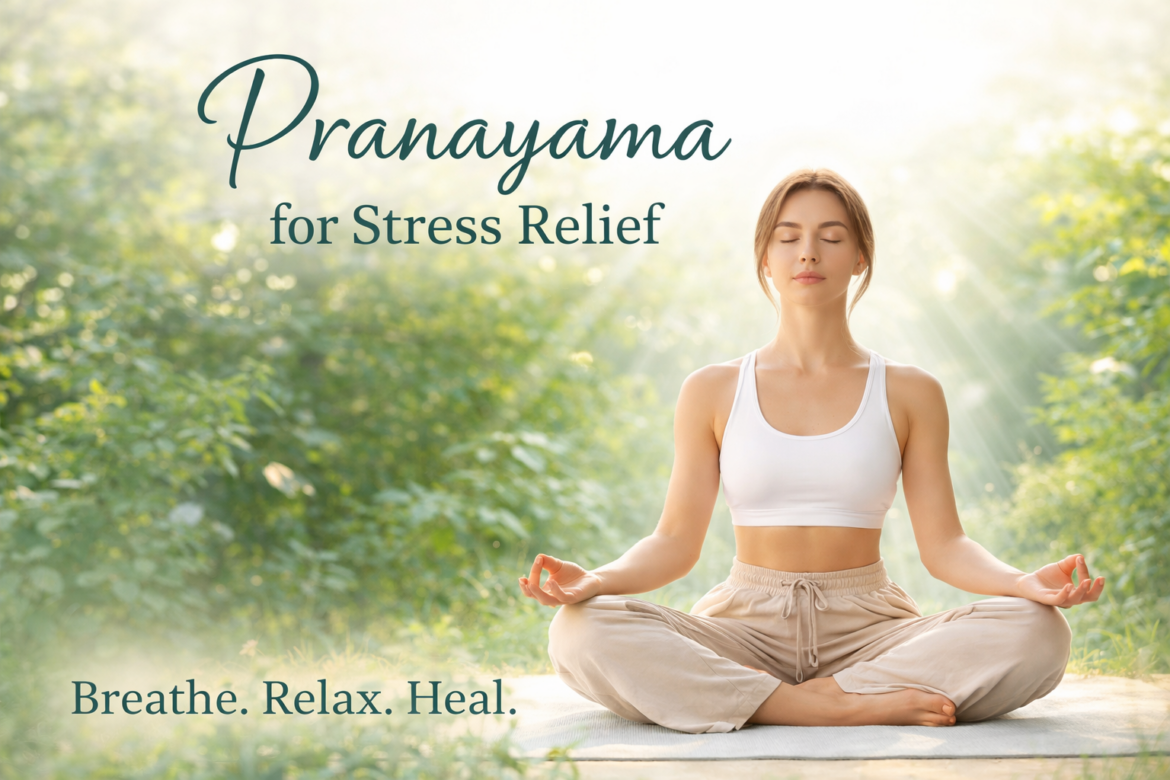
In today’s fast-paced world, stress has become a constant companion for many people. Work pressure, digital overload, financial concerns, and lifestyle imbalances often leave the mind restless and the body tense. While modern solutions like medication and therapy can be helpful, ancient yogic practices offer natural and sustainable ways to manage stress. One such powerful practice is Pranayama—the science of breath control.
Pranayama is a core component of yoga that focuses on regulating the breath to influence the mind, body, and emotions. By practicing specific breathing techniques regularly, one can calm the nervous system, reduce anxiety, and restore inner balance. This article explores effective Pranayama techniques for stress relief, their benefits, and tips for safe practice.
Understanding Pranayama and Its Connection to Stress
The word Pranayama is derived from two Sanskrit words: Prana (life force or vital energy) and Ayama (control or expansion). In yogic philosophy, breath is considered the bridge between the body and the mind. When the breath is shallow and irregular, the mind tends to be restless. When the breath becomes slow and controlled, the mind naturally calms down.
Stress triggers the “fight or flight” response, activating the sympathetic nervous system. Pranayama works in the opposite direction by stimulating the parasympathetic nervous system, which promotes relaxation, emotional stability, and mental clarity.
Benefits of Pranayama for Stress Relief
Regular practice of Pranayama offers multiple physical and psychological benefits, including:
- Reduces stress and anxiety levels
- Improves focus and mental clarity
- Enhances emotional balance
- Lowers blood pressure and heart rate
- Improves sleep quality
- Boosts lung capacity and oxygen supply
- Strengthens the immune system
These benefits make Pranayama an effective and accessible tool for managing everyday stress.
Best Pranayama Techniques for Stress Relief
1. Anulom Vilom (Alternate Nostril Breathing)
Anulom Vilom is one of the most popular and effective Pranayama techniques for calming the mind.
How to Practice:
- Sit comfortably with your spine straight
- Close your right nostril with your right thumb and inhale through the left nostril
- Close the left nostril with your ring finger and exhale through the right nostril
- Inhale through the right nostril, then switch and exhale through the left
- This completes one cycle
Practice for 5–10 minutes.
Benefits:
- Balances the nervous system
- Reduces anxiety and mental fatigue
- Improves concentration
2. Bhramari Pranayama (Bee Breathing)
Bhramari Pranayama involves making a humming sound during exhalation, which has a deeply soothing effect on the brain.
How to Practice:
- Sit in a comfortable position and close your eyes
- Inhale deeply through the nose
- Exhale slowly while making a humming sound like a bee
- Focus on the vibration in your head
Repeat for 5–7 rounds.
Benefits:
- Instantly calms the mind
- Reduces anger, frustration, and stress
- Helps with insomnia and headaches
3. Deep Belly Breathing (Diaphragmatic Breathing)
This simple yet powerful breathing technique encourages full oxygen exchange.
How to Practice:
- Lie down or sit comfortably
- Place one hand on your chest and the other on your abdomen
- Inhale deeply through the nose, allowing the belly to expand
- Exhale slowly, letting the belly fall
Practice for 5–10 minutes.
Benefits:
- Lowers cortisol (stress hormone) levels
- Promotes relaxation
- Improves emotional awareness
4. Ujjayi Pranayama (Victorious Breath)
Ujjayi breathing involves gently constricting the throat to create a soft ocean-like sound.
How to Practice:
- Inhale slowly through the nose while slightly contracting the throat
- Exhale through the nose with the same throat contraction
- Maintain a steady, rhythmic breath
Practice for 5 minutes.
Benefits:
- Calms the nervous system
- Improves focus and mindfulness
- Reduces mental restlessness
5. Nadi Shodhana Pranayama
Often confused with Anulom Vilom, Nadi Shodhana includes breath retention (kumbhaka) and is slightly more advanced.
Benefits:
- Clears energy channels (nadis)
- Enhances emotional stability
- Reduces chronic stress and anxiety
Beginners should learn this under expert guidance.
6. Sheetali and Sheetkari Pranayama (Cooling Breaths)
These cooling breathing techniques are especially useful during emotional agitation or heat-related stress.
Benefits:
- Cools the body and mind
- Reduces irritability and anxiety
- Promotes mental calmness
Best Time and Tips for Practicing Pranayama
To gain maximum benefits from Pranayama for stress relief, keep these tips in mind:
- Practice on an empty stomach, preferably in the morning
- Choose a quiet, well-ventilated space
- Start slowly and increase duration gradually
- Maintain awareness of your breath
- Avoid forceful breathing
- Practice regularly for long-term results
People with medical conditions such as asthma, heart problems, or high blood pressure should consult a healthcare professional or a qualified yoga instructor before starting.
Integrating Pranayama into Daily Life
Even 10–15 minutes of daily Pranayama can bring noticeable changes in stress levels and overall well-being. You can combine breathing practices with meditation, gentle yoga, or mindfulness for enhanced results. Over time, Pranayama not only helps manage stress but also builds resilience against future challenges.
Conclusion
Pranayama is a timeless and powerful practice that offers a natural solution to modern-day stress. By consciously regulating the breath, we can influence our mental state, calm the nervous system, and restore inner peace. Whether you are a beginner or an experienced practitioner, incorporating Pranayama techniques for stress relief into your daily routine can lead to a healthier, more balanced life.
In a world full of chaos, your breath can become your anchor—guiding you back to calm, clarity, and control.