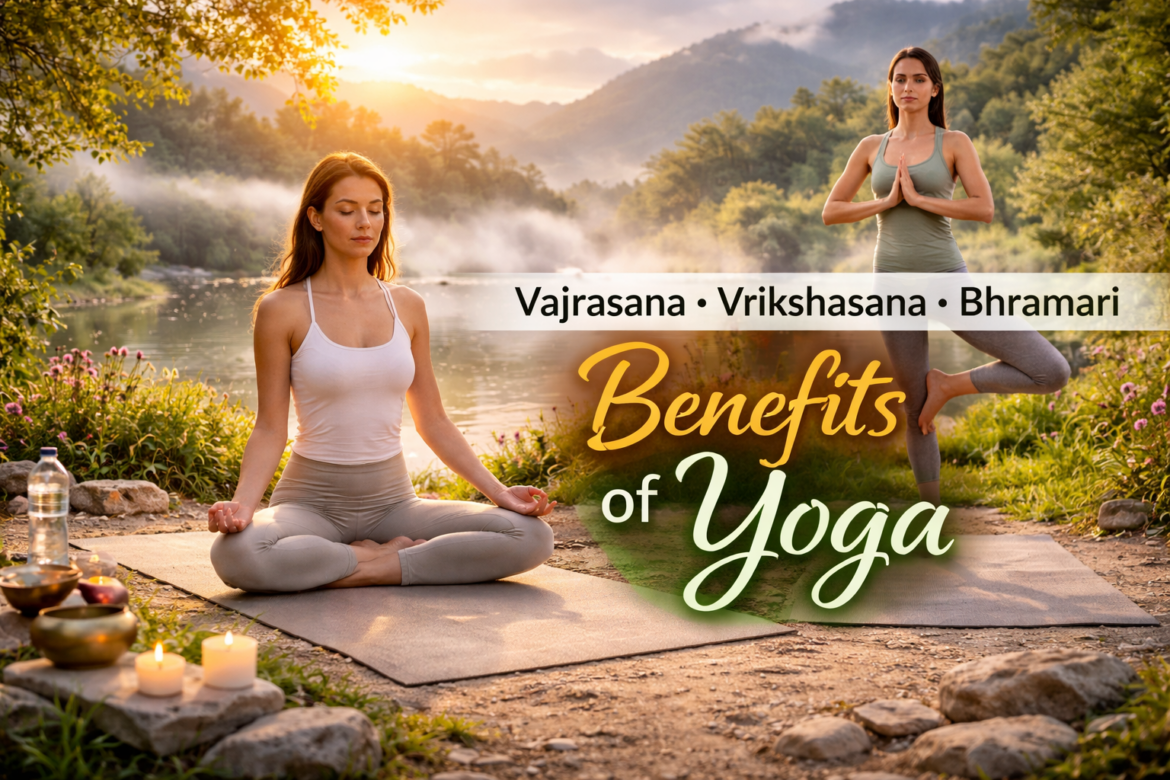
Yoga is far more than just physical exercise — it is a complete system for harmonizing the body, mind, and inner energy. From ancient astrological concepts like Budhaditya Yoga to grounding postures such as Vajrasana Yoga, balancing poses like Vrikshasana Yoga, and calming breathing techniques like Bhramari Yoga, each practice offers unique benefits for modern life.
In today’s fast-paced world, stress, poor posture, and mental fatigue are common. Integrating these traditional yogic elements into your daily routine can help you feel more centered, focused, and energized. Let’s explore how these powerful practices work together to support holistic well-being.
Understanding Budhaditya Yoga
Budhaditya Yoga is not a physical yoga posture but an important concept from Vedic astrology. It occurs when the Sun (Surya) and Mercury (Budh) are positioned together in a person’s birth chart. This combination is believed to enhance intelligence, communication skills, leadership abilities, and confidence.
People influenced by Budhaditya Yoga are often described as:
- Sharp thinkers
- Good decision-makers
- Skilled speakers or writers
- Naturally confident individuals
While Budhaditya Yoga is determined astrologically, yogic practices can help strengthen the positive traits associated with it. Meditation, breathing exercises, and balancing postures improve mental clarity and focus — qualities closely linked with Mercury’s intellect and the Sun’s vitality.
Practicing physical and breathing yoga techniques regularly can help you develop the inner discipline, awareness, and confidence often associated with Budhaditya Yoga.
Vajrasana Yoga: The Thunderbolt Pose
Vajrasana Yoga, also known as the Thunderbolt or Diamond Pose, is one of the few yoga postures that can be practiced immediately after meals. It is a simple kneeling posture, yet it offers powerful digestive and mental benefits.
How to Practice Vajrasana Yoga
- Kneel on the floor with your knees together.
- Sit back on your heels so your hips rest on your feet.
- Keep your spine straight and hands on your thighs.
- Close your eyes and breathe normally.
- Stay in the pose for 5–10 minutes.
Benefits of Vajrasana Yoga
- Improves digestion and reduces bloating
- Strengthens lower back and pelvic muscles
- Encourages proper posture
- Calms the mind and reduces stress
Because Vajrasana stabilizes the body, it is also an excellent position for meditation and breathing practices like Bhramari Yoga. The grounded nature of this pose supports mental clarity — a key trait associated with Budhaditya Yoga.
Vrikshasana Yoga: The Tree Pose
Vrikshasana Yoga, or Tree Pose, is a balancing posture that builds stability, concentration, and body awareness. Just as a tree stands firm while adapting to the wind, this pose teaches both steadiness and flexibility.
How to Practice Vrikshasana Yoga
- Stand straight with feet together.
- Shift your weight onto your left leg.
- Bend your right knee and place the sole of your right foot on your inner left thigh (or calf if needed).
- Bring your palms together in a prayer position at your chest or raise them overhead.
- Focus on a fixed point in front of you to maintain balance.
- Hold for 20–40 seconds, then switch sides.
Benefits of Vrikshasana Yoga
- Improves balance and coordination
- Strengthens legs, ankles, and core
- Enhances concentration and focus
- Builds mental resilience
Balancing poses like Vrikshasana Yoga require mental stillness and sharp focus, helping to train the mind to stay present. This mental discipline aligns well with the intellectual and focused qualities linked to Budhaditya Yoga.
Bhramari Yoga: The Humming Bee Breath
Bhramari Yoga, also called Bhramari Pranayama, is a breathing technique that involves making a gentle humming sound like a bee. It is highly effective for calming the nervous system and reducing mental tension.
How to Practice Bhramari Yoga
- Sit comfortably in Vajrasana or any cross-legged position.
- Close your eyes and relax your shoulders.
- Place your index fingers gently on the cartilage of your ears.
- Inhale deeply through your nose.
- As you exhale, make a soft humming sound.
- Feel the vibration in your head and chest.
- Repeat 5–10 times.
Benefits of Bhramari Yoga
- Reduces anxiety and stress
- Improves concentration
- Lowers blood pressure
- Helps manage anger and emotional tension
- Promotes better sleep
The soothing vibrations created during Bhramari Yoga directly affect the brain and nervous system, encouraging relaxation and mental clarity. This calm yet alert mental state supports the intellectual strength associated with Budhaditya Yoga.
How These Practices Work Together
When combined, Vajrasana Yoga, Vrikshasana Yoga, and Bhramari Yoga create a balanced routine for both physical and mental health.
| Practice | Main Focus | Key Benefit |
|---|---|---|
| Vajrasana Yoga | Grounding posture | Better digestion & calm mind |
| Vrikshasana Yoga | Balance pose | Improved focus & stability |
| Bhramari Yoga | Breathing technique | Stress relief & mental clarity |
These practices also indirectly help cultivate the positive qualities symbolized by Budhaditya Yoga — intelligence, confidence, and clarity in communication.
A Simple Daily Routine
You can follow this easy 15–20 minute sequence:
- Start with Vajrasana Yoga – Sit for 5 minutes, focusing on your breath.
- Practice Vrikshasana Yoga – Hold each side for 30 seconds, repeat twice.
- End with Bhramari Yoga – Perform 7–10 rounds of humming breath.
This routine helps:
- Center your thoughts
- Improve posture
- Increase focus before work or study
- Reduce evening stress
Mental and Emotional Benefits
Modern life constantly overstimulates the brain. Regular yoga practice provides a much-needed pause. The stillness of Vajrasana, the concentration required in Vrikshasana Yoga, and the soothing vibration of Bhramari Yoga help balance the nervous system.
Over time, you may notice:
- Better emotional control
- Improved memory and focus
- Greater self-confidence
- Clearer communication
These improvements beautifully reflect the symbolic strengths of Budhaditya Yoga, where intellect and self-expression are enhanced.
Final Thoughts
Whether you are interested in the astrological significance of Budhaditya Yoga or the physical and mental benefits of Vajrasana Yoga, Vrikshasana Yoga, and Bhramari Yoga, these practices offer powerful tools for self-growth.
You don’t need hours of practice — just consistency. A few minutes daily can help you build strength, balance your emotions, and sharpen your mind. Over time, yoga becomes more than a routine; it becomes a way of living with awareness, confidence, and inner calm.
Roll out your mat, sit in stillness, balance like a tree, and breathe like a humming bee — your mind and body will thank you.