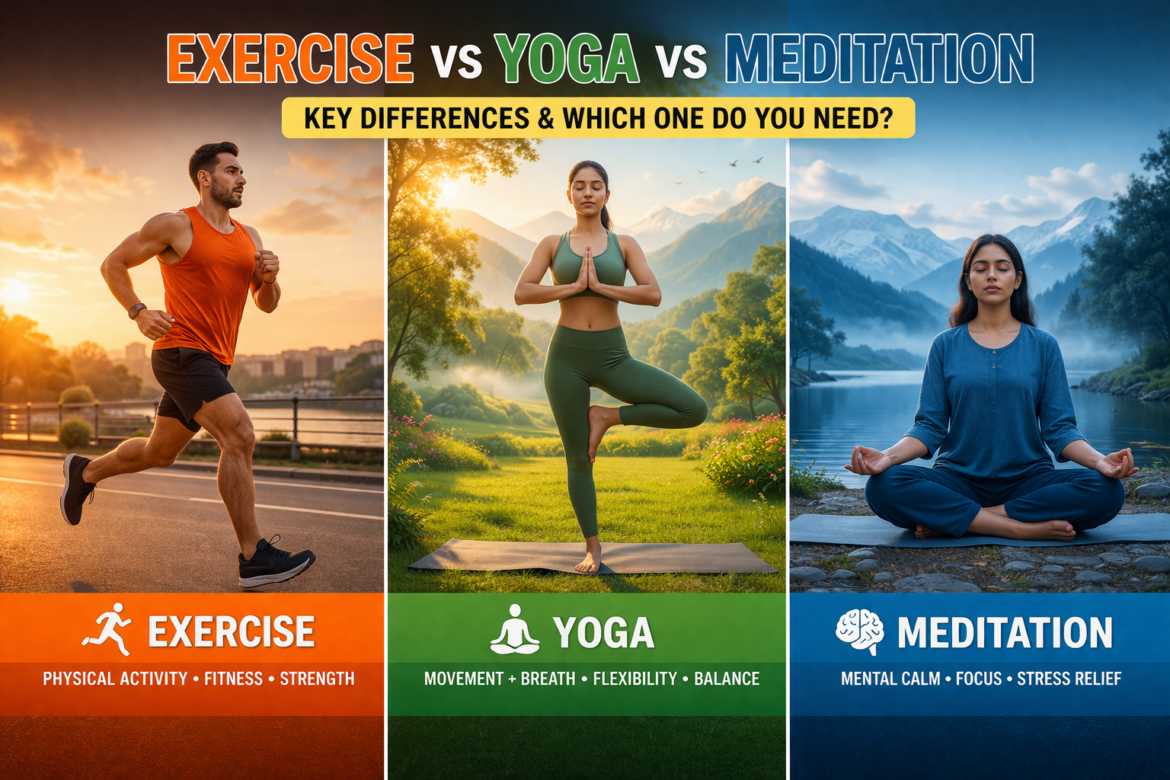
In today’s fast-paced lifestyle, maintaining physical fitness and mental well-being has become a priority for many people. As a result, terms like exercise, yoga, and meditation are frequently used in conversations about health and wellness. However, many people still feel confused about their exact meanings and benefits. Are they the same? Can they replace one another? Or do they serve different purposes?
Understanding the difference between exercise, yoga, meditation is essential to choosing the right practice based on your personal health goals. While all three contribute to a healthier life, they work in distinct ways and focus on different aspects of the human body and mind. This article explores each practice in detail, compares them, and helps you decide how to include them in your daily routine.
What Is Exercise?
Exercise refers to any physical activity that involves body movement with the goal of improving or maintaining physical fitness, strength, endurance, flexibility, and overall health. It primarily focuses on the physical body and is often associated with workouts that increase heart rate and burn calories.
Types of Exercise
Exercise can be broadly categorized into the following types:
- Aerobic exercise: Running, walking, cycling, swimming, dancing
- Strength training: Weight lifting, resistance band workouts, bodyweight exercises
- Flexibility exercises: Stretching routines
- Balance exercises: Stability workouts, functional training
Benefits of Exercise
Regular exercise offers a wide range of physical and mental benefits, such as:
- Improves cardiovascular health
- Builds muscle strength and bone density
- Helps in weight management and fat loss
- Boosts energy levels
- Enhances mood by releasing endorphins
- Reduces the risk of chronic diseases like diabetes and heart disease
Limitations of Exercise
While exercise is extremely beneficial, it mainly focuses on physical fitness. Without proper guidance or recovery, it can sometimes lead to injuries, muscle strain, or burnout. Exercise alone may not fully address stress, emotional balance, or inner calm.
What Is Yoga?
Yoga is an ancient practice that originated in India thousands of years ago. It is a holistic discipline that combines physical postures (asanas), breathing techniques (pranayama), and mental awareness. Unlike exercise, yoga aims to create harmony between the body, mind, and breath.
Types of Yoga
There are several forms of yoga, including:
- Hatha Yoga: Gentle postures and breathing
- Vinyasa Yoga: Flow-based movements
- Ashtanga Yoga: Structured and physically demanding
- Yin Yoga: Slow poses with deep stretching
- Kundalini Yoga: Focuses on energy awakening
Benefits of Yoga
Yoga offers benefits that go beyond physical fitness:
- Improves flexibility, posture, and balance
- Enhances breathing capacity and lung health
- Reduces stress and anxiety
- Improves focus and concentration
- Supports joint and spine health
- Promotes emotional balance
Yoga vs Exercise
When understanding the difference between exercise, yoga, meditation, yoga stands in the middle. It involves physical movement like exercise but also emphasizes breathing and mindfulness, which exercise often lacks.
What Is Meditation?
Meditation is a mental practice that involves focusing the mind to achieve a state of awareness, calmness, and inner peace. It does not involve physical movement like exercise or yoga poses. Instead, meditation works at a deeper mental and emotional level.
Types of Meditation
Common forms of meditation include:
- Mindfulness meditation: Awareness of the present moment
- Focused meditation: Concentration on breath, mantra, or object
- Loving-kindness meditation: Cultivating compassion
- Guided meditation: Following verbal instructions
- Transcendental meditation: Silent mantra repetition
Benefits of Meditation
Meditation primarily benefits mental and emotional health:
- Reduces stress, anxiety, and depression
- Improves mental clarity and focus
- Enhances emotional intelligence
- Helps manage negative thoughts
- Improves sleep quality
- Promotes inner peace and self-awareness
Limitations of Meditation
Meditation alone may not significantly improve physical strength or endurance. For overall physical fitness, it is best combined with yoga or exercise.
Difference Between Exercise, Yoga, Meditation: A Detailed Comparison
Understanding the difference between exercise, yoga, meditation becomes easier when we compare them side by side.
1. Primary Focus
- Exercise: Physical strength, stamina, and fitness
- Yoga: Balance of body, breath, and mind
- Meditation: Mental clarity, awareness, and inner peace
2. Physical Movement
- Exercise: High to moderate physical movement
- Yoga: Controlled, mindful movements
- Meditation: Minimal or no physical movement
3. Mental Involvement
- Exercise: Limited mental focus
- Yoga: Moderate mental awareness
- Meditation: Deep mental focus and mindfulness
4. Breathing Techniques
- Exercise: Natural or rhythmic breathing
- Yoga: Structured breathing practices
- Meditation: Conscious breath awareness or mantra focus
5. Calorie Burning
- Exercise: High calorie burn
- Yoga: Moderate calorie burn
- Meditation: Minimal calorie burn
6. Stress Management
- Exercise: Indirect stress relief
- Yoga: Direct stress reduction
- Meditation: Deep stress and emotional healing
Which One Should You Choose?
Choosing between exercise, yoga, and meditation depends on your personal health goals.
- If your goal is weight loss and muscle building, exercise is essential.
- If you want flexibility, posture improvement, and stress reduction, yoga is ideal.
- If you are seeking mental peace, focus, and emotional balance, meditation is the best choice.
However, these practices are not mutually exclusive. In fact, combining all three can provide maximum benefits.
Can Exercise, Yoga and Meditation Be Practiced Together?
Yes, and this is often the most effective approach. A balanced lifestyle includes all three practices:
- Exercise strengthens the body
- Yoga aligns the body and mind
- Meditation calms the mind and nurtures inner awareness
For example:
- Morning: Light exercise or yoga
- Evening: Meditation for relaxation
- Weekly routine: Strength training, yoga sessions, and daily meditation
This integrated approach ensures overall physical, mental, and emotional well-being.
Scientific Perspective on Exercise, Yoga, and Meditation
Modern research supports the benefits of all three practices. Exercise improves cardiovascular health and metabolism. Yoga has been shown to reduce inflammation and improve flexibility. Meditation positively affects brain function, reduces cortisol levels, and enhances emotional regulation.
Understanding the difference between exercise, yoga, meditation helps in applying each practice effectively rather than expecting one to fulfill all health needs.
Common Myths About Exercise, Yoga, and Meditation
Myth 1: Yoga Is Just Stretching
Yoga is not just stretching; it is a complete mind-body discipline involving breath and awareness.
Myth 2: Meditation Is Only for Spiritual People
Meditation is for anyone seeking mental clarity and stress relief, regardless of spiritual beliefs.
Myth 3: Exercise Is Enough for Mental Health
Exercise helps, but mental practices like yoga and meditation provide deeper emotional balance.
Final Thoughts
The difference between exercise, yoga, meditation lies in their purpose, approach, and benefits. Exercise focuses on physical fitness, yoga bridges physical and mental health, and meditation works primarily on the mind and emotions. Rather than choosing one over the others, integrating all three into your daily routine can lead to a healthier, more balanced, and fulfilling life.
In today’s world, where stress and sedentary habits are common, understanding and practicing exercise, yoga, and meditation together can transform not just your body, but also your mind and overall quality of life.
By recognizing their differences and unique benefits, you can make informed decisions and create a wellness routine that truly supports your long-term health and happiness.