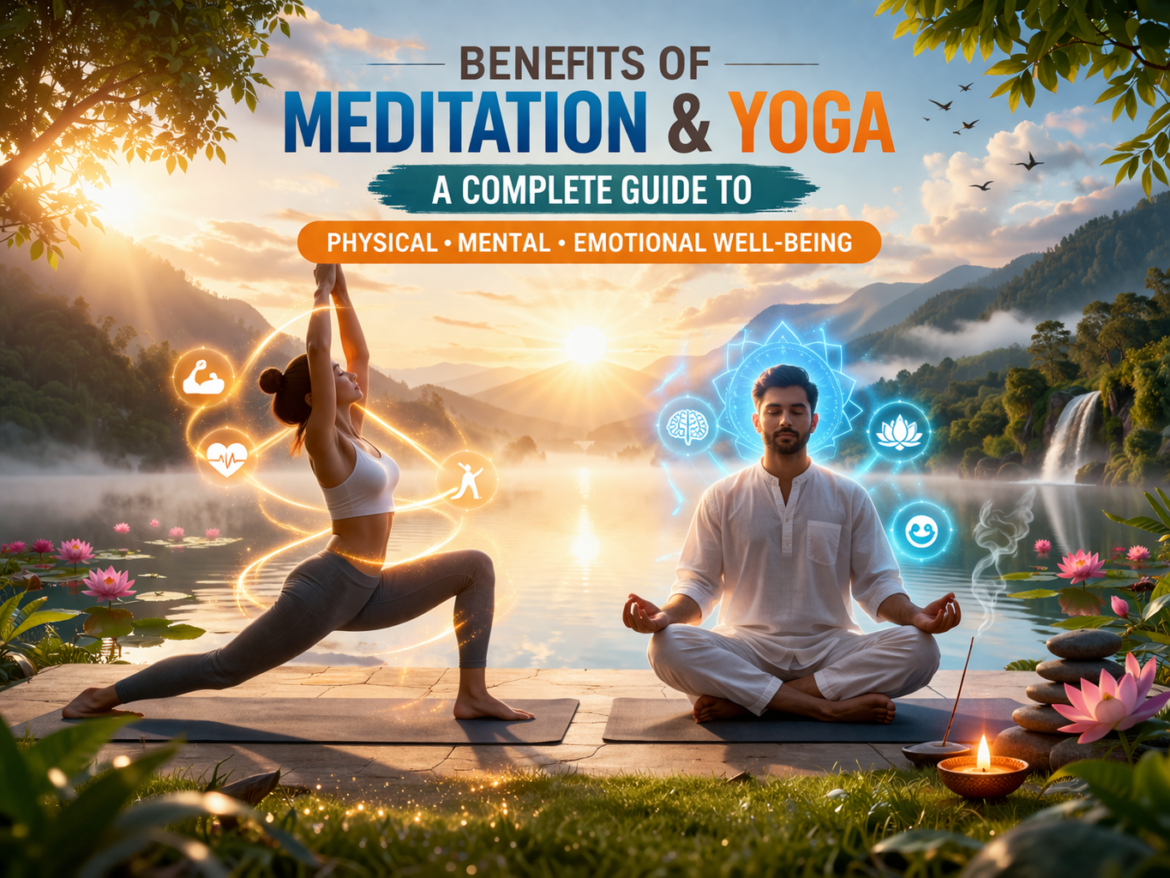
In today’s fast-paced world, stress, anxiety, and lifestyle diseases have become common problems. People are constantly searching for natural and effective ways to improve their health without relying heavily on medications. This is where ancient practices like yoga and meditation play a powerful role. The benefit of meditation and yoga goes far beyond physical fitness; these practices nurture mental clarity, emotional balance, and overall harmony between mind and body.
Rooted in ancient Indian traditions, yoga and meditation have gained global recognition for their proven health benefits. From improving flexibility and posture to calming the mind and enhancing emotional resilience, these practices offer a holistic approach to well-being. In this article, we will explore how meditation and yoga work, their physical and mental health benefits, and why incorporating them into daily life is more important than ever.
Understanding Yoga and Meditation
Yoga is a combination of physical postures (asanas), breathing techniques (pranayama), and mindfulness practices designed to strengthen the body and calm the mind. Meditation, on the other hand, focuses on mental training—helping individuals develop awareness, concentration, and inner peace.
While yoga often involves movement, meditation emphasizes stillness and introspection. Together, they complement each other, creating a balanced system that promotes complete wellness. This synergy explains why the benefit of meditation and yoga is considered holistic rather than limited to one aspect of health.
Physical Health Benefits of Yoga and Meditation
1. Improves Flexibility and Strength
Regular yoga practice increases muscle flexibility, joint mobility, and overall strength. Asanas stretch and tone muscles, reducing stiffness and improving posture. This is especially beneficial for people with sedentary lifestyles.
2. Boosts Immunity
Meditation and yoga help regulate the nervous system and reduce stress hormones like cortisol. Lower stress levels strengthen the immune system, making the body more resistant to infections and illnesses.
3. Enhances Cardiovascular Health
Breathing exercises and meditation improve oxygen circulation and heart function. Yoga also helps regulate blood pressure and cholesterol levels, reducing the risk of heart disease.
4. Supports Weight Management
Yoga encourages mindful eating, better digestion, and hormonal balance. Unlike intense workouts, yoga promotes sustainable weight control by improving metabolism and reducing emotional eating.
Mental Health Benefits of Meditation and Yoga
One of the most significant aspects of the benefit of meditation and yoga lies in mental and emotional well-being. In a world dominated by screens, deadlines, and constant stimulation, mental health has become a priority.
Stress Reduction and Emotional Balance
Meditation trains the mind to stay present, reducing overthinking and mental fatigue. Yoga postures release tension stored in the body, creating a sense of calm and relaxation.
Improved Focus and Concentration
Regular practice enhances attention span and cognitive function. Meditation strengthens neural connections associated with memory and learning, making it easier to concentrate in daily life.
Emotional Stability
Yoga and meditation help individuals manage emotions more effectively. Instead of reacting impulsively, practitioners learn to respond with awareness and control.
Yoga for Relaxation and Inner Calm
Many people turn to yoga primarily for stress relief. Certain poses, combined with deep breathing, activate the parasympathetic nervous system, which is responsible for relaxation. This makes yoga for relaxation of mind an effective natural remedy for mental exhaustion, restlessness, and emotional burnout.
Gentle yoga styles such as Hatha and Yin Yoga are particularly beneficial for calming the nervous system. When practiced consistently, yoga creates a sense of inner peace that extends beyond the mat and into daily life.
Meditation Yoga and Their Effects on Daily Life
The combined practice of meditation and yoga leads to noticeable changes in everyday experiences. From better sleep patterns to improved decision-making, the long-term impact is profound.
The meditation yoga and their effects include enhanced self-awareness, improved emotional intelligence, and better stress management. People who practice regularly often report increased confidence, patience, and resilience when facing challenges.
Yoga and Meditation for Mental Health
Mental health issues such as anxiety, depression, and burnout are increasingly common. Natural approaches like yoga and meditation are now recommended alongside conventional therapies.
Research shows that yoga and meditation for mental health can reduce symptoms of anxiety and depression by regulating brain chemistry and promoting relaxation. These practices encourage mindfulness, which helps individuals break negative thought patterns and cultivate a more positive outlook on life.
Is Yoga or Meditation Better for Anxiety?
A common question among beginners is: is yoga or meditation better for anxiety? The answer depends on individual preferences and needs.
Yoga is ideal for people who struggle with restlessness, as it allows movement while calming the mind. Meditation, on the other hand, is effective for those who want to directly train their thoughts and emotions. In most cases, a combination of both yields the best results, addressing anxiety from both physical and mental perspectives.
Need of Yoga for Good Health in Modern Lifestyle
With increasing work pressure, poor posture, unhealthy diets, and lack of physical activity, lifestyle disorders are on the rise. This highlights the need of yoga for good health in modern society.
Yoga improves posture, digestion, sleep quality, and energy levels. It also encourages mindfulness, helping people make healthier choices in daily life. Practicing yoga regularly can prevent chronic illnesses and improve quality of life without side effects.
Benefits of Yoga and Meditation for Mental Health
The benefits of yoga and meditation for mental health include reduced stress, improved emotional regulation, enhanced self-confidence, and better coping mechanisms. These practices create a safe mental space where individuals can observe their thoughts without judgment.
Over time, this awareness leads to greater emotional stability and inner strength, helping people navigate life’s ups and downs with grace and clarity.
Spiritual and Emotional Growth
Beyond physical and mental benefits, yoga and meditation also promote spiritual growth. They encourage self-reflection, gratitude, and a deeper connection with oneself. This inner alignment fosters compassion, empathy, and a sense of purpose.
Many practitioners experience increased clarity about their goals and values, leading to more meaningful and balanced lives.
How to Start Yoga and Meditation Practice
Starting a yoga and meditation routine does not require expensive equipment or prior experience. Beginners can start with simple stretches, breathing exercises, and short meditation sessions of 5–10 minutes daily.
Consistency is more important than duration. Practicing regularly, even for a short time, delivers long-lasting results. Guided sessions, online videos, or local classes can help beginners stay motivated and maintain proper technique.
Conclusion
The benefits of meditation and yoga extends to every aspect of life—physical health, mental clarity, emotional stability, and spiritual growth. In a world filled with stress and distractions, these ancient practices offer a natural and sustainable path to well-being.
By incorporating yoga and meditation into daily routines, individuals can improve their health, manage stress effectively, and cultivate inner peace. Whether practiced separately or together, yoga and meditation empower people to live healthier, happier, and more balanced lives.